- Have any questions?
- 051 6112414
- 0331 2220247 | 0334 5510161
- info@psychcaretherapy.com


The Day I Stopped Saying “I’m Fine”

THE CONVERSATION WE KEEP AVOIDING
September 12, 2026
When Bedtime Keeps Getting Pushed Back
October 5, 2026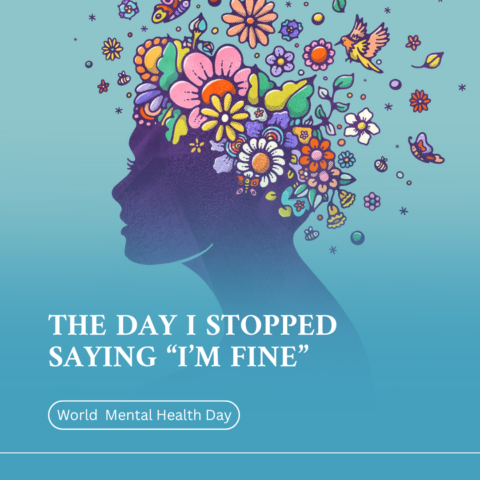
The Day I Stopped Saying “I’m Fine”:
What Lived Experience Teaches Us About Healing
When “I’m Fine” Doesn’t Really Mean Fine
“I’m fine.” We say these two words almost automatically. Someone asks how we are doing, and before we even think about the answer, we smile and say, “I’m fine.” Sometimes it is true. But sometimes those words are carrying much more than they appear to. “I’m fine” can mean, “I don’t know how to explain what I’m feeling.” It can mean, “I don’t want to worry anyone.” It can mean, “I’m afraid you will judge me.” It can mean, “I have responsibilities, and I don’t have time to fall apart.” And sometimes it means, “I have become so good at hiding my struggles that I no longer know how to talk about them.”
For many people, the journey towards better mental health begins when “I’m fine” stops feeling true. It may happen after months of anxiety, following a painful loss, during burnout, after a panic attack, or simply after years of putting everyone else’s needs before their own. There does not always have to be a dramatic breakdown. Sometimes there is only a quiet thought: “I don’t want to keep living like this.” That thought can be the beginning of something important—the decision to finally listen to yourself.
World Mental Health Day: Listening Beyond the Diagnosis
World Mental Health Day is observed every year on 10 October, providing an opportunity to raise awareness about mental health and encourage greater attention to mental health care around the world. In 2026, the theme is “Lived Experiences Heard: Real Voices, Real Change.” The focus is particularly meaningful because it asks us to listen to people who have experienced mental health challenges themselves and recognise that their experiences should contribute to how mental health services, policies and support are shaped.
This changes the way we think about mental health. Mental health is not simply a collection of diagnoses written in a textbook. It is the student sitting in a classroom while silently worrying about failing. It is the parent who takes care of everyone but feels emotionally exhausted. It is the professional who continues working while struggling with burnout. It is the person awake at 2 a.m., replaying a conversation from earlier that day. It is also the person who smiles, socialises and appears successful while privately wondering why they no longer feel like themselves.
When we listen to lived experiences, mental health becomes human. We stop seeing only symptoms and begin seeing people.
Nadia’s Story: When Anxiety Becomes Part of Everyday Life
Nadia is 29, works full-time and has a busy social life. From the outside, she appears to be doing well. She goes to work, meets friends, answers messages and takes care of her responsibilities. If someone asked her family whether anything was wrong, they might say, “She is just stressed.”
But Nadia has been struggling for months. She wakes up tired even after sleeping. Her mind constantly moves from one worry to another. She worries about work, relationships, health and the future. Ordinary decisions feel unnecessarily difficult. Things she once enjoyed have slowly started feeling like obligations.
Then one afternoon, Nadia experiences what feels like an overwhelming wave of fear. Her heart races, her breathing changes and she becomes convinced that something is seriously wrong. Eventually the episode passes, but a new fear takes its place: “What if it happens again?”
Nadia begins avoiding certain situations. She searches her physical symptoms online. She repeatedly asks people around her for reassurance. She becomes increasingly aware of her heartbeat, breathing and bodily sensations. Nobody looking at her would necessarily know what is happening inside.
Eventually, Nadia speaks with a psychologist. She expects to be told exactly how to make the anxiety disappear. Instead, she begins exploring what her anxiety has been trying to communicate, what thoughts trigger it and how her responses may be keeping the cycle going. For the first time, she stops seeing herself as weak and starts seeing her experience as something that can be understood.
Understanding Before Judging
This is one of the most important ideas in psychological care: before trying to change a pattern, we often need to understand it. A person who avoids social situations may not simply be “antisocial.” They may be experiencing social anxiety. Someone who becomes irritable may not simply be rude; they may be overwhelmed or emotionally exhausted. Someone who cannot concentrate may not be lazy; anxiety, depression, sleep difficulties or burnout may be affecting their ability to focus.
Understanding does not mean excusing every behaviour. It means looking beneath the behaviour with curiosity rather than immediately responding with judgement.
This is where psychological assessment and therapy can be valuable. Therapy provides a space where a person can explore their thoughts, emotions, behaviours, relationships and experiences without having to pretend that everything is fine. PsychCare describes its approach as providing a safe, caring and confidential environment where individualised treatment goals are developed collaboratively with the client. Its services include assessment, diagnosis and therapy for individuals, couples and families, as well as psychological assessment for children, adolescents and adults.
What Healing Really Looks Like
We often imagine healing as a dramatic transformation. Someone is struggling, they begin therapy, and suddenly they become completely confident, positive and happy. Real psychological healing is rarely that simple.
Sometimes healing is much quieter. It may mean sleeping slightly better. It may mean recognising an anxious thought before automatically believing it. It may mean saying no without feeling overwhelming guilt. It may mean having a difficult conversation instead of avoiding it. It may mean returning to something you once enjoyed. It may mean understanding why a particular situation affects you so strongly. It may even mean allowing yourself to admit, “Today is difficult,” without feeling ashamed.
Progress does not always sound like, “I feel amazing.” Sometimes it sounds like, “I understand myself a little better today.” That matters.
Mental wellbeing does not mean feeling happy every day. Sadness, fear, anger, disappointment and grief are normal parts of being human. Psychological wellbeing is not about eliminating every uncomfortable emotion. It is about developing healthier ways of understanding emotions, responding to challenges and caring for ourselves when life becomes difficult.
What Therapy Really Looks Like
Many people hesitate to begin therapy because they imagine that a psychologist will simply tell them what to do. They may think, “Tell me how to stop overthinking,” “Tell me how to fix my relationship,” or “Tell me how to stop feeling anxious.” But therapy is rarely about receiving a universal instruction manual.
People are different. Their histories are different. Their relationships, beliefs, coping mechanisms and circumstances are different. Good psychological care therefore needs to be personalised.
Therapy can involve developing insight, learning coping skills, exploring patterns, processing difficult experiences and building healthier ways of responding. PsychCare states that its clinicians draw on a range of therapeutic approaches, including Cognitive Behavioural Therapy, trauma therapy, mindfulness, motivational interviewing, art and expressive therapy and other interventions depending on individual needs.
The purpose is not to turn someone into a completely different person. It is to help them understand themselves more clearly and develop healthier ways of moving through life.
The Lived Experience of Anxiety, Depression and Trauma
Anxiety is often described simply as worry, but living with significant anxiety can be much more complicated. A person may experience racing thoughts, physical tension, restlessness, difficulty concentrating, sleep problems and a constant feeling that something may go wrong. Telling someone with anxiety to “just relax” rarely helps because they already want to relax. The problem is that their mind and body may be responding as though there is a threat that needs immediate attention.
Depression can be equally misunderstood. Not everyone experiencing depression is visibly sad. For some people, depression feels like heaviness. For others, it feels like numbness. Someone may continue working, studying and talking to friends while feeling emotionally disconnected inside. This is one reason mental health awareness must move beyond stereotypes. A person does not have to look devastated for their emotional experience to be real.
Trauma can also leave people carrying experiences that others cannot see. A traumatic experience may affect a person’s sense of safety, trust and emotional regulation. Certain sounds, places, memories or situations may trigger intense reactions. Some people become hyper-alert, while others avoid reminders or feel emotionally disconnected. Trauma-informed care therefore needs to respect a person’s pace and sense of safety. Healing should not involve forcing someone to reveal more than they are ready to share.
Why Being Heard Matters
There is something powerful about being believed. Imagine saying, “I have been anxious for months,” and hearing, “But you have nothing to worry about.” The person may leave thinking, “Maybe there is something wrong with me.”
Now imagine receiving a different response: “That sounds really difficult. Tell me more about what you have been experiencing.”
The anxiety has not disappeared, but something has changed. The person has been given permission to speak without immediately defending their feelings.
This is why lived experience matters. The World Health Organization has repeatedly highlighted the importance of listening to people with lived experience in improving mental health support, and the 2026 World Mental Health Day theme specifically emphasises moving from simply hearing people’s stories towards meaningful change in mental health policy, services and practice.
Being heard does not mean that every feeling automatically represents a mental disorder. It means that people’s experiences deserve to be understood before they are dismissed.
Recovery Is Not a Straight Line
One of the most important things lived experiences teach us is that recovery is rarely linear. Someone may feel better for several weeks and then have a difficult day. They may learn a coping strategy and still experience anxiety. They may establish a boundary and later feel guilty about it. They may understand an unhealthy thought pattern and still fall into it sometimes.
That does not necessarily mean that they have failed.
Imagine Nadia again. After spending time in therapy, she begins recognising the thoughts that increase her anxiety. She understands how avoiding certain situations has provided temporary relief while making those situations feel even more frightening. Slowly, she begins facing some of the things she had been avoiding.
Her anxiety does not disappear overnight. But she becomes less frightened by the feeling of anxiety itself. She begins trusting herself. One day, a friend asks, “How are you?” Nadia pauses. Instead of automatically saying, “I’m fine,” she says, “Honestly, I’ve had a difficult week.”
It is a small sentence.
But for Nadia, it represents something enormous.
She has stopped hiding from herself.
If You Are the Person Saying “I’m Fine”
Perhaps you are the person who always says, “I’m fine.” If so, consider pausing for a moment. Are you actually okay, or have you simply become very good at functioning while struggling?
Have there been changes in your sleep, appetite, concentration, motivation, energy or mood? Have you stopped enjoying things that once mattered to you? Are you constantly worried, emotionally exhausted or overwhelmed? Are your relationships, studies or work being affected?
These questions do not automatically mean that you have a mental health disorder. Difficult emotions are part of normal life. But when distress becomes persistent, intense or disruptive, it deserves attention.
You do not have to wait until your life completely falls apart before seeking psychological support. You do not have to prove that your pain is serious enough. Sometimes the first step is simply saying, “I want to understand what is happening to me.”
That is enough.
Maybe Strength Needs a New Definition
Perhaps we need to redefine strength.
Maybe strength is not pretending that nothing hurts. Maybe strength is being honest about what does hurt. Maybe strength is not carrying everything alone. Maybe strength is recognising when support is needed.
We often admire people who seem able to handle everything. But sometimes the person everyone calls “strong” is simply the person who has never felt permitted to struggle openly.
You can be capable and still need help. You can be successful and still feel anxious. You can love your family and still feel overwhelmed. You can be grateful for your life and still experience depression. Two truths can exist at the same time.
Seeking psychological support does not erase your strength. Sometimes it is an expression of it.
This World Mental Health Day, Listen Differently
This World Mental Health Day, perhaps we can do more than simply post about mental health. We can listen differently. Listen to the person whose anxiety nobody sees. Listen to the person grieving quietly. Listen to the parent who is exhausted. Listen to the student who feels overwhelmed. Listen to the professional experiencing burnout. Listen to the person who is afraid to start therapy. And perhaps most importantly, listen to yourself.
The 2026 theme, “Lived Experiences Heard: Real Voices, Real Change,” reminds us that mental health conversations become meaningful when real experiences are taken seriously.
Behind every diagnosis is a person. Behind every symptom is an experience. Behind every “I’m fine” may be a story that has never been told.
At PsychCare, the focus is on creating a healthy environment for change, with safe, caring and confidential psychological support tailored to individual needs. The clinic provides therapy and assessment services and also offers online consultations, making psychological support more accessible to people who may find it difficult to attend in person.
If you have been carrying something quietly, perhaps you do not need to have the perfect words for it. You do not need to know exactly what is wrong. You do not need to wait until you cannot cope anymore.
You can simply begin with the truth.
“I’m not fine.”
“I’m struggling.”
“I don’t understand what is happening to me.”
“I think I need some help.”
Sometimes, that is where healing begins.
Because the most important sentence in someone’s healing journey may not be, “I am fine.”
It may be:
“This is what I am really going through.”
And the response they deserve is not judgement, comparison or “just be strong.”
Sometimes, they simply need someone to say:
“I’m listening.”
When “I’m Fine” Doesn’t Really Mean Fine
“I’m fine.” We say these two words almost automatically. Someone asks how we are doing, and before we even think about the answer, we smile and say, “I’m fine.” Sometimes it is true. But sometimes those words are carrying much more than they appear to. “I’m fine” can mean, “I don’t know how to explain what I’m feeling.” It can mean, “I don’t want to worry anyone.” It can mean, “I’m afraid you will judge me.” It can mean, “I have responsibilities, and I don’t have time to fall apart.” And sometimes it means, “I have become so good at hiding my struggles that I no longer know how to talk about them.”
For many people, the journey towards better mental health begins when “I’m fine” stops feeling true. It may happen after months of anxiety, following a painful loss, during burnout, after a panic attack, or simply after years of putting everyone else’s needs before their own. There does not always have to be a dramatic breakdown. Sometimes there is only a quiet thought: “I don’t want to keep living like this.” That thought can be the beginning of something important—the decision to finally listen to yourself.
World Mental Health Day: Listening Beyond the Diagnosis
World Mental Health Day is observed every year on 10 October, providing an opportunity to raise awareness about mental health and encourage greater attention to mental health care around the world. In 2026, the theme is “Lived Experiences Heard: Real Voices, Real Change.” The focus is particularly meaningful because it asks us to listen to people who have experienced mental health challenges themselves and recognise that their experiences should contribute to how mental health services, policies and support are shaped.
This changes the way we think about mental health. Mental health is not simply a collection of diagnoses written in a textbook. It is the student sitting in a classroom while silently worrying about failing. It is the parent who takes care of everyone but feels emotionally exhausted. It is the professional who continues working while struggling with burnout. It is the person awake at 2 a.m., replaying a conversation from earlier that day. It is also the person who smiles, socialises and appears successful while privately wondering why they no longer feel like themselves.
When we listen to lived experiences, mental health becomes human. We stop seeing only symptoms and begin seeing people.
Nadia’s Story: When Anxiety Becomes Part of Everyday Life
Consider Nadia. Nadia is 29, works full-time and has a busy social life. From the outside, she appears to be doing well. She goes to work, meets friends, answers messages and takes care of her responsibilities. If someone asked her family whether anything was wrong, they might say, “She is just stressed.”
But Nadia has been struggling for months. She wakes up tired even after sleeping. Her mind constantly moves from one worry to another. She worries about work, relationships, health and the future. Ordinary decisions feel unnecessarily difficult. Things she once enjoyed have slowly started feeling like obligations.
Then one afternoon, Nadia experiences what feels like an overwhelming wave of fear. Her heart races, her breathing changes and she becomes convinced that something is seriously wrong. Eventually the episode passes, but a new fear takes its place: “What if it happens again?”
Nadia begins avoiding certain situations. She searches her physical symptoms online. She repeatedly asks people around her for reassurance. She becomes increasingly aware of her heartbeat, breathing and bodily sensations. Nobody looking at her would necessarily know what is happening inside.
Eventually, Nadia speaks with a psychologist. She expects to be told exactly how to make the anxiety disappear. Instead, she begins exploring what her anxiety has been trying to communicate, what thoughts trigger it and how her responses may be keeping the cycle going. For the first time, she stops seeing herself as weak and starts seeing her experience as something that can be understood.
Understanding Before Judging
This is one of the most important ideas in psychological care: before trying to change a pattern, we often need to understand it. A person who avoids social situations may not simply be “antisocial.” They may be experiencing social anxiety. Someone who becomes irritable may not simply be rude; they may be overwhelmed or emotionally exhausted. Someone who cannot concentrate may not be lazy; anxiety, depression, sleep difficulties or burnout may be affecting their ability to focus.
Understanding does not mean excusing every behaviour. It means looking beneath the behaviour with curiosity rather than immediately responding with judgement.
This is where psychological assessment and therapy can be valuable. Therapy provides a space where a person can explore their thoughts, emotions, behaviours, relationships and experiences without having to pretend that everything is fine. PsychCare describes its approach as providing a safe, caring and confidential environment where individualised treatment goals are developed collaboratively with the client. Its services include assessment, diagnosis and therapy for individuals, couples and families, as well as psychological assessment for children, adolescents and adults.
What Healing Really Looks Like
We often imagine healing as a dramatic transformation. Someone is struggling, they begin therapy, and suddenly they become completely confident, positive and happy. Real psychological healing is rarely that simple.
Sometimes healing is much quieter. It may mean sleeping slightly better. It may mean recognising an anxious thought before automatically believing it. It may mean saying no without feeling overwhelming guilt. It may mean having a difficult conversation instead of avoiding it. It may mean returning to something you once enjoyed. It may mean understanding why a particular situation affects you so strongly. It may even mean allowing yourself to admit, “Today is difficult,” without feeling ashamed.
Progress does not always sound like, “I feel amazing.” Sometimes it sounds like, “I understand myself a little better today.” That matters.
Mental wellbeing does not mean feeling happy every day. Sadness, fear, anger, disappointment and grief are normal parts of being human. Psychological wellbeing is not about eliminating every uncomfortable emotion. It is about developing healthier ways of understanding emotions, responding to challenges and caring for ourselves when life becomes difficult.
What Therapy Really Looks Like
Many people hesitate to begin therapy because they imagine that a psychologist will simply tell them what to do. They may think, “Tell me how to stop overthinking,” “Tell me how to fix my relationship,” or “Tell me how to stop feeling anxious.” But therapy is rarely about receiving a universal instruction manual.
People are different. Their histories are different. Their relationships, beliefs, coping mechanisms and circumstances are different. Good psychological care therefore needs to be personalised.
Therapy can involve developing insight, learning coping skills, exploring patterns, processing difficult experiences and building healthier ways of responding. PsychCare states that its clinicians draw on a range of therapeutic approaches, including Cognitive Behavioural Therapy, trauma therapy, mindfulness, motivational interviewing, art and expressive therapy and other interventions depending on individual needs.
The purpose is not to turn someone into a completely different person. It is to help them understand themselves more clearly and develop healthier ways of moving through life.
The Lived Experience of Anxiety, Depression and Trauma
Anxiety is often described simply as worry, but living with significant anxiety can be much more complicated. A person may experience racing thoughts, physical tension, restlessness, difficulty concentrating, sleep problems and a constant feeling that something may go wrong. Telling someone with anxiety to “just relax” rarely helps because they already want to relax. The problem is that their mind and body may be responding as though there is a threat that needs immediate attention.
Depression can be equally misunderstood. Not everyone experiencing depression is visibly sad. For some people, depression feels like heaviness. For others, it feels like numbness. Someone may continue working, studying and talking to friends while feeling emotionally disconnected inside. This is one reason mental health awareness must move beyond stereotypes. A person does not have to look devastated for their emotional experience to be real.
Trauma can also leave people carrying experiences that others cannot see. A traumatic experience may affect a person’s sense of safety, trust and emotional regulation. Certain sounds, places, memories or situations may trigger intense reactions. Some people become hyper-alert, while others avoid reminders or feel emotionally disconnected. Trauma-informed care therefore needs to respect a person’s pace and sense of safety. Healing should not involve forcing someone to reveal more than they are ready to share.
Why Being Heard Matters
There is something powerful about being believed. Imagine saying, “I have been anxious for months,” and hearing, “But you have nothing to worry about.” The person may leave thinking, “Maybe there is something wrong with me.”
Now imagine receiving a different response: “That sounds really difficult. Tell me more about what you have been experiencing.”
The anxiety has not disappeared, but something has changed. The person has been given permission to speak without immediately defending their feelings.
This is why lived experience matters. The World Health Organization has repeatedly highlighted the importance of listening to people with lived experience in improving mental health support, and the 2026 World Mental Health Day theme specifically emphasises moving from simply hearing people’s stories towards meaningful change in mental health policy, services and practice.
Being heard does not mean that every feeling automatically represents a mental disorder. It means that people’s experiences deserve to be understood before they are dismissed.
Recovery Is Not a Straight Line
One of the most important things lived experiences teach us is that recovery is rarely linear. Someone may feel better for several weeks and then have a difficult day. They may learn a coping strategy and still experience anxiety. They may establish a boundary and later feel guilty about it. They may understand an unhealthy thought pattern and still fall into it sometimes.
That does not necessarily mean that they have failed.
Imagine Nadia again. After spending time in therapy, she begins recognising the thoughts that increase her anxiety. She understands how avoiding certain situations has provided temporary relief while making those situations feel even more frightening. Slowly, she begins facing some of the things she had been avoiding.
Her anxiety does not disappear overnight. But she becomes less frightened by the feeling of anxiety itself. She begins trusting herself. One day, a friend asks, “How are you?” Nadia pauses. Instead of automatically saying, “I’m fine,” she says, “Honestly, I’ve had a difficult week.”
It is a small sentence.
But for Nadia, it represents something enormous.
She has stopped hiding from herself.
If You Are the Person Saying “I’m Fine”
Perhaps you are the person who always says, “I’m fine.” If so, consider pausing for a moment. Are you actually okay, or have you simply become very good at functioning while struggling?
Have there been changes in your sleep, appetite, concentration, motivation, energy or mood? Have you stopped enjoying things that once mattered to you? Are you constantly worried, emotionally exhausted or overwhelmed? Are your relationships, studies or work being affected?
These questions do not automatically mean that you have a mental health disorder. Difficult emotions are part of normal life. But when distress becomes persistent, intense or disruptive, it deserves attention.
You do not have to wait until your life completely falls apart before seeking psychological support. You do not have to prove that your pain is serious enough. Sometimes the first step is simply saying, “I want to understand what is happening to me.”
That is enough.
Maybe Strength Needs a New Definition
Perhaps we need to redefine strength.
Maybe strength is not pretending that nothing hurts. Maybe strength is being honest about what does hurt. Maybe strength is not carrying everything alone. Maybe strength is recognising when support is needed.
We often admire people who seem able to handle everything. But sometimes the person everyone calls “strong” is simply the person who has never felt permitted to struggle openly.
You can be capable and still need help. You can be successful and still feel anxious. You can love your family and still feel overwhelmed. You can be grateful for your life and still experience depression. Two truths can exist at the same time.
Seeking psychological support does not erase your strength. Sometimes it is an expression of it.
This World Mental Health Day, Listen Differently
This World Mental Health Day, perhaps we can do more than simply post about mental health. We can listen differently. Listen to the person whose anxiety nobody sees. Listen to the person grieving quietly. Listen to the parent who is exhausted. Listen to the student who feels overwhelmed. Listen to the professional experiencing burnout. Listen to the person who is afraid to start therapy. And perhaps most importantly, listen to yourself.
The 2026 theme, “Lived Experiences Heard: Real Voices, Real Change,” reminds us that mental health conversations become meaningful when real experiences are taken seriously.
Behind every diagnosis is a person. Behind every symptom is an experience. Behind every “I’m fine” may be a story that has never been told.
At PsychCare, the focus is on creating a healthy environment for change, with safe, caring and confidential psychological support tailored to individual needs. The clinic provides therapy and assessment services and also offers online consultations, making psychological support more accessible to people who may find it difficult to attend in person.
If you have been carrying something quietly, perhaps you do not need to have the perfect words for it. You do not need to know exactly what is wrong. You do not need to wait until you cannot cope anymore.
You can simply begin with the truth.
“I’m not fine.”
“I’m struggling.”
“I don’t understand what is happening to me.”
“I think I need some help.”
Sometimes, that is where healing begins.
Because the most important sentence in someone’s healing journey may not be, “I am fine.”
It may be:
“This is what I am really going through.”
And the response they deserve is not judgement, comparison or “just be strong.”
Sometimes, they simply need someone to say:
“I’m listening.”