- Have any questions?
- 051 6112414
- 0331 2220247 | 0334 5510161
- info@psychcaretherapy.com


Anonymity – Can You Hide Your Self?

Screen Time and Emotional Wellbeing in Adolescents
July 25, 2025
Is It Burnout or Depression? Learn the Difference
August 29, 2025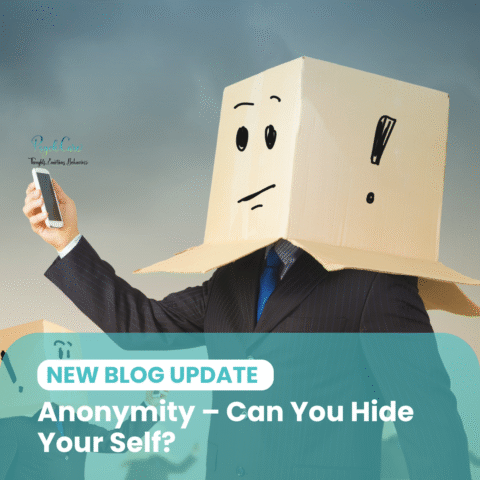
In today’s digital age, we live in two parallel worlds: one that is visible and one that is hidden. On social media, we share our names, faces, jobs, and lives openly. But sometimes, we choose not to.
We use fake names.
We hide our real photos.
We post opinions we’d never say aloud.
This is called anonymity — being invisible, on purpose.
Why Do We Choose Anonymity?
Anonymity gives us freedom.
It allows us to speak openly, express our fears, desires, and even our anger. Behind the screen, we feel safer:
- No one can judge us.
- No one can trace us.
- No one can silence us.
Sometimes, this feels liberating. But other times, it creates a deeper problem.
Because the person behind the screen is still… you.
The Psychology of Anonymity
Research shows that people behave differently when their identity is hidden. According to Christopherson (2007), an anonymous user may:
- Speak more harshly
- Spread false information
- Engage in trolling
Why does this happen? Because anonymity creates a detachment from real identity.
But here’s the truth: the anonymous self is still part of the real self.
You can’t escape who you are — you can only dress it up differently.
Anonymity as Freedom or Mask?
Sometimes, anonymity reveals truth. It gives people a voice they never had.
Other times, it becomes a mask:
- A place to hide
- A way to avoid accountability
The longer we wear that mask, the harder it becomes to take it off. This creates a psychological conflict inside us — between who we truly are and who we pretend to be online.
Self-Discrepancy and Inner Stress
Psychologist Higgins (1987) described this as self-discrepancy theory — the gap between our real self and our ideal or hidden self.
This gap can cause:
- Stress
- Guilt
- Confusion
We start asking ourselves:
“Is this really me?”
“Or is this who I become when no one knows it’s me?”
And that’s where the lines begin to blur.
Social Media and the Mask We Wear
Social media didn’t invent anonymity, but it amplified it. Today, everyone has both:
- A voice to express
- A mask to hide behind
Some people use it to protect themselves. Others use it to harm. But in the end, the mask never disappears — it either hides your truth or replaces it.
Final Reflection
So, ask yourself:
Do you hide your self?
Or are you simply more honest when no one is looking?
References
- Christopherson, K. M. (2007). The positive and negative implications of anonymity in Internet social interactions: “On the Internet, Nobody Knows You’re a Dog.” Computers in Human Behavior, 23(6), 3038–3056.
- Higgins, E. T. (1987). Self-discrepancy: A theory relating self and affect. Psychological Review, 94(3), 319–340.